Interview: Time Of The Mouth

Based in Worcester, Time Of The Mouth (TOTM) are a pop-rock trio made up of Chris Jones (frontman and guitarist), Mitchul Tyler (bass) and Ollie Badger (drums). Following on from 2018’s release of Beautiful Storm, we caught up with the guys to learn about them and their new single, Tears.
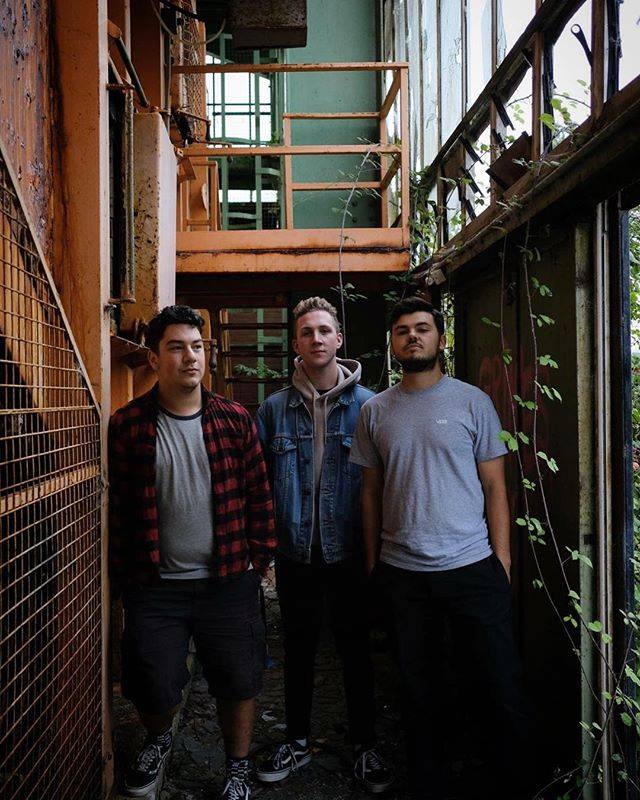
Photo credit to @ro_bere

Hi guys, thanks for coming in to talk to us! Let’s talk basics first. How did Time of the Mouth form and how did the name come about?

TOTM were formed when Chris (who was 14 at the time) was approached by two school friends who had seen him perform his solo acoustic songs, to ask him if he was interested in forming a band.The name came about when, during a band naming session in Chris’s living room the three 14 year old lads found the name ‘Time Of The Month’ highly amusing, only for Chris’s Mum to enter the room and immediately ban them from using that name, so a similar sounding alternative was sought hence the now familiar version of TOTM.

What’s been your biggest musical achievement of your careers so far?

There have been a few highlights, which have been spread over the time that the band have been together. Playing at the LG arena on the acoustic stage before ‘The Who’ played on their Quadrophenia tour definitely stands out, as does our headline show at the O2 Academy 3 in Birmingham. Getting airplay on radio stations in America and Australia has also given us a buzz.

What drew you to wanting to be a part of the music industry?

A desire to perform, a love for music and a reluctance to accept living in the ‘real world’.

Your new single Tears was released on Friday – congrats guys! The subject of the song is rather dark but sadly all too common these days. Is this something you’ve had a certain experience with?

We have all had experience, either through friends, family or personally of various mental health issues and the message of the song is really to encourage people to reach out and seek support rather than bottle up mental health issues as we know that this can lead to very sad and tragic outcomes.

Do you think there is enough support for the mental health of musicians?

It’s something that is starting to be taken more seriously and there are various organisations out there, like ‘Music Minds Matter’ that have been set up to support musicians with their mental health issues.

It’s quite a serious music video – what gave you the idea to have your fans holding up signs with their diagnoses and issues related to mental health?

We were keen to get our fans involved with this video after getting to know the issues that some of them have have faced in their day to day lives. We have been told on a few occasions that our music has helped them when they have been suffering from mental health issues, as it has either reminded them of happier times, or it has provided them with a form of escape from their problems for a little while. Hearing this has meant a lot to us, and inspired us to come up with the idea for the video, so it seemed very natural to ask some of our friends and fans to take part in the video.

If you could change one thing about the industry, what would it be?

Apart from a guarantee of success for TOTM, we would love the industry to be less about financial resources at our level. We know so many great bands who don’t have the financial clout to buy their way onto tours, or to pay small fortunes for PR or guaranteed radio airplay, so a more level playing field would be fairer and would help make the industry more pure and more talent based. The total extermination of the entertainment culture that brought us the X-Factor and BGT would be nice too…

What has the rest of 2019 got in store for you guys?

We have an album ready to launch when the time feels right, but for now it’s really about getting out all across the UK and playing as many shows and festivals as we can to as many people as possible. We are working with some great people who are helping us to build on our successes so far, so you can expect a couple more singles, videos and hopefully a lot more exposure for us during the rest of 2019.

Check out the video for their new single Tears below:

Catch Time Of The Mouth at West Street Live in Sheffield on May 6th or at Uncover in Worcester on May 31st

If you feel like you need someone to talk to, you can contact Samaritans on 116 123

Youth in Retrospect: Kurt Cobain

Hey kids, me again (surprise). Now I like to think I’m teaching you at least something on this blog but I decided to do this new history feature, Youth in Retrospect, just in case, so we can all ‘do a learn’ whilst (mainly) celebrating some major events in musical history.

Nirvana (noun): A transcendent state in which there is neither suffering, desire, nor sense of self and the subject is released from the effects of karma and the cycle of death & rebirth. Often considered to be the final goal of Buddhism.

Now I won’t lie, I’m not a die-hard fan of Nirvana and never have been. If I’m completely honest, the grunge genre never appealed to me. Having said this, I can still understand the impact of Kurt Cobain’s loss on this fateful day 25 years ago (5th April). It’s an interesting one, this, because Kurt Cobain has been dead for longer than I (and I’m sure, many of you) have been alive. Heck, in two years he will have been dead for longer than he was alive. It’s one of those thoughts on which if you dwell too long, you’ll end up down a rabbit hole that, quite frankly, you don’t want to be down.

Okay so let’s get the basics out of the way. Kurt Donald Cobain was born on 20th February 1967 in Aberdeen, Washington, USA. He died on 5th April 1994 in Seattle, Washington, USA by way of suicide. In 1985, Kurt met Krist Novoselic (Nirvana’s bass player) where they went on to play in several bands together, including Stiff Woodies. Nirvana was formed in December of 1987 however it wasn’t until September 1990 that Dave Grohl became their drummer, completing the line-up everyone knows and loves to this day.

After 4 months of dating, on 24th February 1992, Cobain married Courtney Love whilst she was pregnant with what would be their only child – Frances Bean Cobain. A record executive once noted of Love and Cobain that they were “the nineties, much more talented version of Sid and Nancy”. However it would appear that the executive managed to foresee the future, also commenting that they would “self-destruct” if nothing happened. When they met, Nirvana were at their peak and Cobain never learned how to deal with the overnight fame that came from their album, Nevermind. It’s been said this was partially due to his poor upbringing, with him still choosing to drive a second hand car for the rest of his life. Nevermind was never meant to be so successful. Grunge was a subculture that started in the 1980s, largely in Seattle, however the album definitely influenced the popularity of it – which, as we all know, defeats the point of a subculture. The overnight success into alternate mainstream was something that Nirvana didn’t know how to deal with, and didn’t expect to have to learn.

Despite Nirvana’s popularity constantly being on the up, Kurt Cobain found himself in a serious spiral. This was causing his addiction to heroin to become more severe. The pair both tried to quit for the sake of their daughter however the story often went that only a few days after checking into rehab, they’d both be back out and searching for the next high. It wasn’t until February 1994 that Cobain’s spiral truly affected the band, with threats being made to cancel the European leg of the In Utero tour just five dates in. To add fuel to the already blazing fire, his relationships with both bandmates and his wife were rapidly deteriorating. On March 1st, Nirvana’s final performance came to a swift end when Cobain announced they would not be continuing due to laryngitis. With a 10-day break on tour, he flew to Rome to be met by Love and their daughter a few days later. This was where he had his first suicide attempt. He would then go on to have three more before shooting himself at his home in Seattle on 5th April.

Make no mistake though, Nirvana sure made sure to achieve a lot in the short space of time they had. They released 3 studio albums – Bleach in 1989 (pre-Grohl), Nevermind in 1991 and In Utero in 1993. They also released three live albums (one post-Cobain in 2009), two EPs and 21 singles. During their time, they were nominated for ten awards, winning five including ‘New Artist’ and ‘Alternate Video’ for Smells Like Teen Spirit, In Bloom and Heart-Shaped Box.

Nevermind by Nirvana, released 1991

There are many conspiracy theories surrounding both Kurt Cobain’s death and reasons for his behaviour throughout his 27 years. Out of respect for both him and those close to him, I don’t feel it right to go into these. There’s only one more certain thing to say and that’s that we lost a legend that day. Rest in peace, Kurt.

Interview: Robbie Zereka

Originally from Wexford, Ireland, Robbie Zereka is continuing to break into the music scene with his second single, Bloodshot, released last Friday. Taking on a slightly more sombre tone than his previous single Favourite Feelings, Bloodshot continues to touch on another sensitive subject – this time being emotional manipulation, that sadly too many of us have or will encounter at some point in our lives. We caught up with him to learn more about it.

Photo by William Pavli

Aside from Bloodshot, obviously, which we’ll get onto in a minute, what’s your proudest musical achievement from the last year?

I would say performing at LoveBN1Fest in Brighton last August. We found out after we’d agreed to the slot that Nile Rodgers was also performing at the same event! We got to watch him close out the festival. It was an unreal day!

You’re one of six children, do you think this influenced your passion for music?

Absolutely. My oldest brother was hugely into music and introduced me to a wide variety of artists at a young age, ranging from David Bowie to Wu-Tang Clan. I also watched a lot of musicals and Michael Jackson music videos on VHS with my little brothers and sister! I would say my biggest childhood musical influence was my mother though. Aside from hearing loads of Dolly Parton, Elvis and Patsy Cline growing up, my mother was actually the first person to introduce me to Radiohead. She showed me the video for No Surprises when I was around 11 and I remember being fascinated by their sound and the image of the strange and beautiful Thom Yorke drowning. My obsession continues!

How would you describe Robbie Zereka for someone who’s never heard of you before?

Emotive yet rousing alternative pop/rock with a pinch of performance art. 

How did Robbie Zereka come about/form conceptually?

Robbie Zereka is a stage name I created for myself. It is actually a phonetic version of my husband’s Lebanese surname, Zreika. I am actually quite shy, so I have now begun experimenting with using Robbie Zereka as an alter-ego on stage. The concept is an evolving work in progress but it is interesting how you can deliver ideas and emotions without inhibition when you remove your more critical “everyday self” from the equation.

So the music video for your song ‘Bloodshot’ was released on Friday – congratulations! This is quite a dark song. Was the inspiration for the song from any experience in particular?

This is a song I wrote about someone in my past who emotionally manipulated and bullied me over a long period of time. I was very close to this person and really looked up to them as they portrayed themselves as invincible to me. It was only in hindsight when this person fell apart that I realised the extent of their abuse. It’s not a triumphant realisation though. Ultimately, the experience taught me to empathise with people in general. I feel like there are always deeper reasons for people’s damaging behaviour and the one that they really feel the hate towards is themselves. Although this was a sad realisation it has allowed me to distance myself from people’s actions and try to understand the motivations behind their behaviour. I find this quite interesting and I spend a lot of time thinking about what drives people.

The idea for the blue heads in the video, where did that come from?

I first imagined the video concept and the blue boys a couple of years ago. I didn’t understand the relevance at the time really but the imagery came to me and I felt compelled to bring the idea to life so I didn’t question the meaning too much. It’s funny, sometimes I don’t really understand the meaning of my work until much later. I won’t elaborate too much as I will let people derive their own meaning from the video but I think it is probably my brain’s weird way of processing the experience that inspired the song itself. It makes sense to me in a strange way!

Are you allowed to reveal who was behind the other head in the video or are you sworn to secrecy?

The other blue boy is my good friend Sami. It’s not a secret and it was a shame to cover up his lovely face but it was important to conceal the blue boys and separate them from the scenes of me alone in the video. Again, I don’t know why but I just felt that there needed to be a distinction between these characters and myself. I wanted them to be otherworldly or non-human almost.

The location is beautiful, can you tell us any more about it?

We shot the video in my friend’s house in North London. He used to own an antique shop and when it closed down he kept his favourite pieces for himself, using them to decorate his house. It really was the perfect location for this story and I am very lucky to have such kind and supportive friends!

When are we next able to hear ‘Bloodshot’ live and what can we expect from a Robbie Zereka show?

I have an acoustic set on 3rd April at Amersham Arms in New Cross and our next full band set is on 17th April at The Lighthouse in Shoreditch! My new character based approach is giving me the confidence to play around visually on stage with costumes and the like so you might see the blue boys in real life if you’re lucky!

Check out the self-produced music video, directed and edited by William Pavli, below:

You can keep up with Robbie Zereka from the links below:

Website: https://www.robbiezereka.com

Facebook: https://www.facebook.com/robbiezereka/

Twitter: https://twitter.com/robbiezereka

Instagram: https://www.instagram.com/robbiezereka

Spotify: https://open.spotify.com/artist/4HxYMGAwOaU42jIlvSNaEv

Editorial: Women in Music

It may seem that equality and the #MeToo movement are all that are being spoken about right now but thank goodness! It’s about time, amiright ladies?

The #MeToo movement was created back in 2006 by activist Tarana Burke however it became an overnight phenomenon in October 2017 after Alyssa Milano encouraged women to speak out via a tweet. This was done in the simple form of tweeting #MeToo however some women took the opportunity to open up in more detail. Within days, social media was flooded with the hashtag from celebrities and people we view as invincible to our next-door neighbours, mothers, best friends, cousins.

As we all know, the film industry was dealt a massive blow with names such as Harvey Weinstein and Kevin Spacey being brought into the spotlight. But what happened to the music industry? As of writing this, R Kelly has spent his last two weeks in and out of jail primarily for the sexual abuse towards four females. However, it only takes one watch of the six-part documentary Surviving R Kelly to realise the number of victims is higher. It’s safe to say the music industry has been less public about releasing names however, sadly, the movement still exists. Music moguls such as Russell Simmons and Charlie Walk, former president of Universal Music Group’s Republic Group, have both been forced to step down after allegations.  

Although #MeToo has caused the industry to sort their shit out and treat women more equally, we still face all sorts of challenges ranging from the lack of women in senior roles/boardrooms to motherhood affecting our jobs. The UK Music Diversity Study of 2016/17 found that whilst women make up 60% of intern and entry level roles, they only make up 30% of senior executive roles. They also make up over half the workforce in the age group 25-34 years old, but only 33% of the age group 45-64 years old. The three major labels all have men at the helm but there is hope! The AIM Board has gradually gone from 1/20 being female to 32% and industry associations such as MMF and BASCA have female CEOs.

Last year, the government made it compulsory for companies with over 250 staff to report on their gender pay gaps. Unfortunately, the three major music labels did not come off too well in these reports. On average, women earn 33.8% less than men with a massive 49% pay gap at Warner Music. That’s practically double, ladies, DOUBLE. Live Nation UK also had a 46% gender pay gap along with a – wait for it – 88%, YES EIGHTY EIGHT, difference in bonuses paid between men and women. There is also an average of just 31% of women in leadership positions at these labels. Having said that, since this report there have been a lot of female promotions so let’s hope for improved statistics in the future! One reason that lack of females in higher positions may have been the case is due to unconscious bias. We tend to ‘hire in our own image’ meaning that if white, middle age men are the ones conducting the interviews, they’re likely to favour the younger men that they can envision growing up to be like them. Because of this, it is now common for orchestras to have blind auditions to ensure the focus really is on the playing, as opposed to the person playing.

Let’s not forget what is considered by the majority of the older generation as the ‘most important role’ in a woman’s life… motherhood. The music industry is yet to perfect the balance between motherhood and continuing a job. In the majority of cases, the primary caregiver is still the mother. In an industry that is running basically 24/7, this can be seen as challenging to balance. Those long office hours mixed in with attending gigs in the evenings and festivals at weekends, not to mention dealing with band members who think nothing of calling at 4:37am, aren’t always understood by a 5-month old baby. This can lead to mothers feeling like they have to ‘pick’. Spotify are hopefully leading the change in this department by now offering equal maternity and paternity packages, as well as an easier return to work for new parents.

Certain areas of the business are still extremely male dominated – mainly the ‘behind the scenes’ part of the industry. Within the studios, there are only a few female producers, mixers and engineers. In DJMag’s top 100 DJs list, which is publicly voted, only 6/100 were women. These numbers are increasing thanks to programmes such as Red Bull’s Normal Not Novelty and Smirnoff ‘s Equalising Music programme. These both offer training for female DJs and producers with Smirnoff also offering performing opportunities at the big festivals. As a Music Event Management student, I can confirm that the majority of the live sector are also men however, again, this is slowly changing. Our course leader ensures we have at least a fair split of men and women all from with the industry. Last year, we had a 50/50 split of men and women.

Although there are more female artists than there are women behind the scenes, this isn’t always reflected within festival line ups. Reading & Leeds and Wireless Festival have both come under scrutiny in the past with Wireless having only three women on the line up during their first announcement of 37 artists. One of these was Cardi B, who later had to pull out due to falling pregnant. If only Offset had done the same, eh? Paul Pacifico, CEO of the Association of Independent Music, commented on the Wireless situation labelling it “absurd” due to half the population being female and half the attendees probably being female. Despite not commenting publicly, I found out that Festival Republic had asked females to perform however they were all unavailable for the dates required. In 2017, only 17% of international festival headliners were women. Keychange, an international initiative created by PRS Foundation, is a pledge for festivals to achieve a 50/50 gender balance by 2022. At the time of writing, over 150 festivals around the world have signed this pledge. 2018’s BBC Music Introducing Live held over 500 speakers on various panels and 50% of these were females. This shows it can be achieved! Alongside this, women are underrepresented on both the radio and streaming services’ playlists (such as Spotify and Apple Music). On country music radio, the approximate ratio of playtime is one female song to every nine male songs. Radio consultant Keith Hill states that this is because 70—75% of country radio listeners are women and “women like male artists”.

Ladies, it may not seem like it now but I promise change is coming. Music Week’s Women in Music Awards are there to celebrate us. The AIM’s Women in Music conference is supported by the Mayor of London. Universities around the country are supporting us. Our entire year on the Music Event Management course is female. Networks are being created to help us build contacts, mentor each other and find job and event opportunities. The future is coming and it’s coming both slowly and so fast you won’t know what’s hit you. If you want to be in the music industry, even in a job that’s ‘not normally done by women’ DO IT. You’ve got this and we’ve all got your back. And for the men reading this, which I hope you are, you can do your part too. Asked to be a part of a panel titled ‘Women in Music’? Do it! Conducting the interviews? Pick the best person for the job, regardless of their gender or age. Become our allies and do what would make your mothers proud. Help us out – Lord knows we need it.